
The Centre for Future Homes to provide sustainable and cost-effective solutions for the construction industry
The Centre for Future Homes, which will open on Birmingham City University’s (BCU) city centre campus later this year, is a research group consisting of BCU academics and construction industry experts.
The centre has been formed to help the construction industry measure its performance, improve the quality of new builds, and analyse the lived-in experience of residents.
Mike Leonard from the Centre for Future Homes said: “The recently released report into Grenfell Tower fire has highlighted the need for greater oversight in the housing industry, which requires a full transformation of its culture to end the race to the bottom. We need to put quality and safety first and ensure the competence and behaviours of all involved in the industry.
“The industry also faces enormous challenges as it transitions to become more resilient in the face of climate change while tackling the new government’s target to build 1.5 million new homes by 2030.
“The report highlighted a systemic failure of the entire building process with greed, incompetence and indifference leading to 72 people tragically losing their lives. It has led to lifelong grieving for the families of those left behind and ongoing misery for the many thousands of people still living in homes where the cladding is deemed unsafe.
“My hope is that the centre will help change the way industry looks at housing, benefiting both residents and builders”.
– Put the customer at the heart of the journey
– Provide the data and insights to allow policy makers to make evidence-based decisions and avoiding unintended consequences.
– Drive a culture change, putting quality and safety first and measuring outcomes rather than inputs
– Delivering real impact to shape the future of safe comfortable, low carbon homes.
The team seek to transfer the knowledge gained from Future Homes Standards demonstrators in the new build sector to the retrofit of 26 million existing homes.
Primary Research
The Centre for Future Homes research team is currently working with industry to deliver PhD research into critical elements that will feature in the change process. This includes making heat pumps more efficient, improving indoor air quality, and preventing overheating.
Climate change is forecast to result in severe weather events including wind, floods and wildfires. Overheating is likely to become a major risk to comfort and a threat to life, particularly for older residents. The team is focused on adapting homes to ensure they are resilient for the next 150 years.
Future Homes Standard Demonstrators
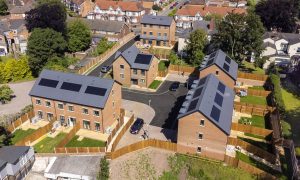
The Centre is committed to supporting the Future Homes Standard by providing real-life evidence from innovative projects. Partnerships with organisations such as Midland Heart and Keepmoat
It is dedicated to creating scalable and sustainable solutions for the housing sector. Through collaborations with Midland Heart, Keepmoat and other key stakeholders, the Centre strives to develop models that can be widely adopted to promote environmental sustainability.
The Centre for Future Homes team believes that engaging occupants is crucial for achieving optimal building performance. Research explores the integration of technology to enhance occupant interaction and satisfaction, ensuring that homes are not only efficient but also user-friendly.
Data and Insight
The Centre provides developers and housing providers with an independent service evaluating the performance of their homes – using a package of sensor and occupant interviews. This work analyses how effectively new and refurbished homes are operating including how occupants experience them.
This delivers a range of benefits including:
– Improved building practices providing sustainable and cost-effective solutions.
– Access to the latest research to create ‘living labs’ that records the design, build commissioning, handover and lived in experience.
Carbon Pact
The Centre, supported by some 15 industry partners are about embark on “Action PHD” research into reducing the use of single life plastic in the industry and understanding the data and Environmental Product Declaration process requirements to accurately measure embodied carbon emissions.
This research will be highly collaborative and will be conducted in real time. It will directly involve the 15 partners from Home Builders, Manufacturers and Merchants and will involve minimum viable trials to evaluate opportunities to develop solutions that reflect the evidence and work in the round.
There is still the opportunity to join this consortium, which is match-funded by the university.
Looking to the future
The team is currently involved in evaluating other demonstration projects in new build and retrofit and is working on the development of new qualifications covering behaviour and competence.
Collaboration is key to the smooth transition to low carbon and building safety. A planned series of STEAM (Science, Technology, Engineering, Arts and Mathematics) challenges taking place in BCU’s innovation hub, the STEAMhouse, will focus on a range of topics including the decarbonisation of energy intensive building materials and the education and integration of sub-contractors.
If you have a project you would like to discuss or would like to become part of the Carbon Pact, pleased reach out to Mike Leonard at mike.leonard@bcu.ac.uk